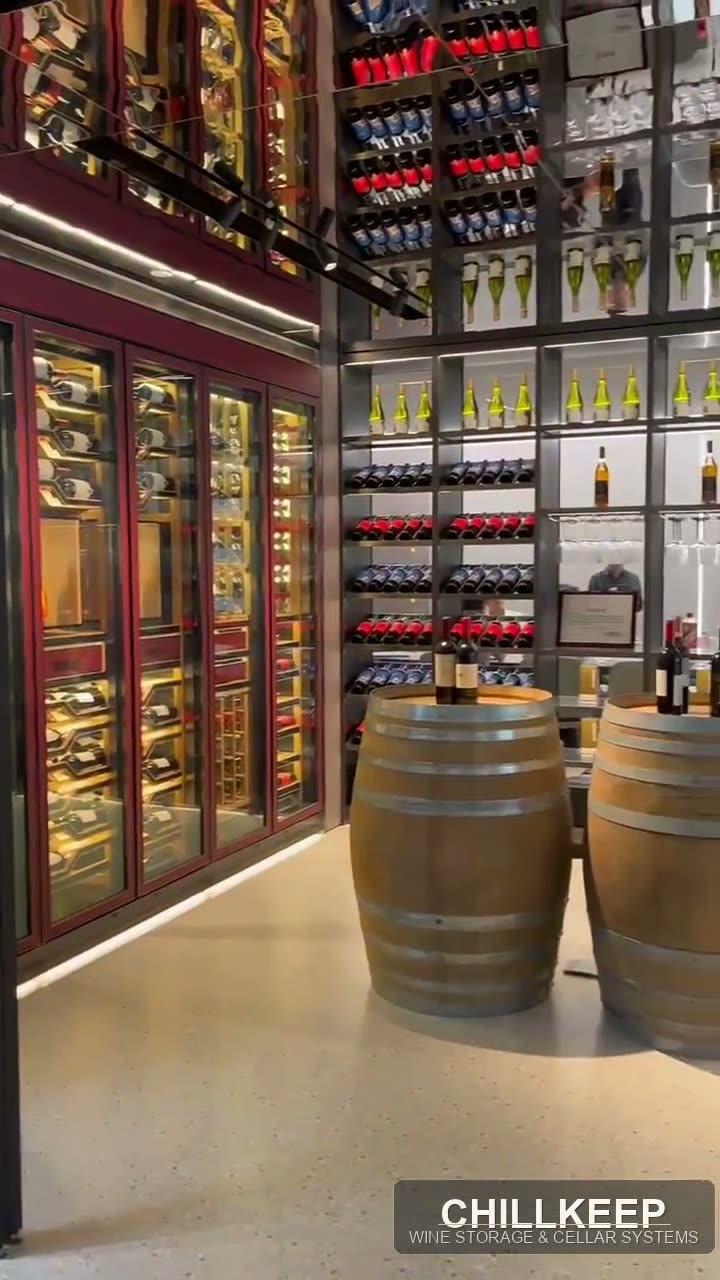
ChillKeep began with a ship's galley, a weld that refused to show, and a collector who asked for a cellar that sounded like nothing at all.
Liang Wei's father built stainless galleys for coastal trading ships. Cold rooms that had to survive salt, storm and forty years of service. The drawings lived rolled up in a drawer: plate thickness, gasket compression, how to weld a corner so the seam disappears.
In 2009 a collector from Napa Valley came to the workshop with a photograph of a cellar he hated — bright, buzzing, full of visible screws. He asked a strange question: could a wine cellar be built like a ship's hold? Welded once. Sealed forever. No fasteners anywhere the eye could reach.
The first ChillKeep commission held 1,140 bottles, left the workshop in eleven weeks, and still runs today on its original compressor.
A cellar is not a refrigerator. A refrigerator moves air to remove heat; a cellar must let wine rest. Every degree of swing expands and contracts the cork. Every vibration stirs the sediment that a decade of patience has been trying to settle.
So we test at two in the morning, when a house is quiet. Sound floor measured one metre from the door, not at the compressor. Target: under 36 dB — quieter than a library at closing time.
Dual-zone control is easy to print on a brochure and hard to prove. Each ChillKeep leaves with a 72-hour temperature log recorded inside the empty chamber — the actual curve, the recoveries after door openings, the overnight drift. The log ships in the crate with the cellar.
If the curve does not hold ±0.4 °C, the cellar does not leave.
We do not paint stainless steel to look like something else. Six PVD finishes, hand-brushed in one direction, then polished until the weld seam is a rumour. Titanium gold is not a coating sprayed on at the end; it is a molecular layer that will still be there when the house changes owners.